Guide
Booking your first offshore charter
What happens on your first offshore fishing charter?
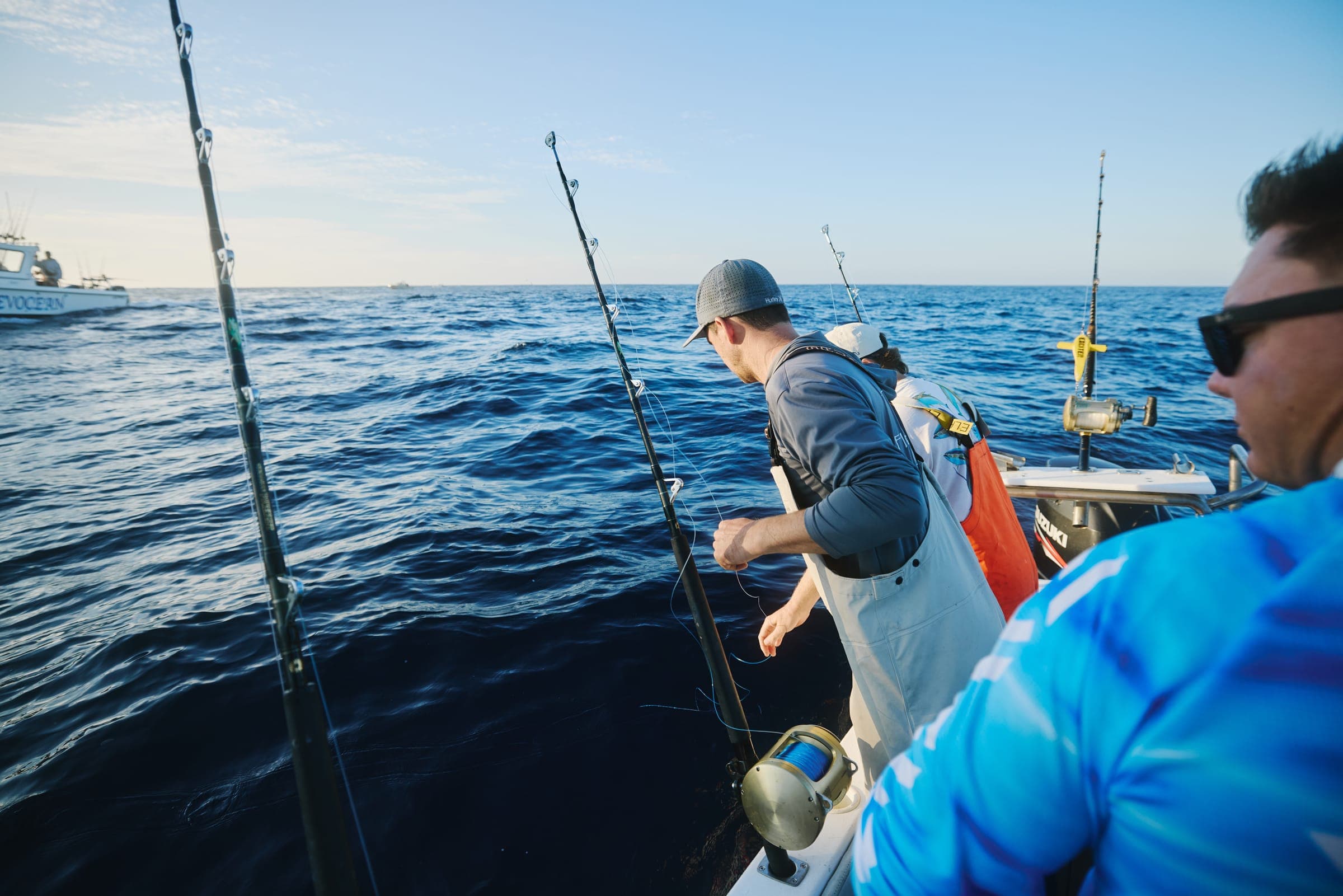
You arrive at Hout Bay Harbour before first light, run one to two and a half hours offshore, fish through the middle of the day and are back on the mooring in the afternoon. The crew rigs everything and talks you through the fight.
5 minute read · Updated
The day, in order
You are asked to arrive at the marina fifteen minutes before departure, which through the summer season means somewhere around half past five. The boat leaves on time because the weather window is the constraint, not the schedule.
- Arrival and briefing. Safety equipment, where things are, what the plan is for the day given the forecast.
- The run out, to grounds up to 40 nautical miles offshore. This is a good time to be on deck rather than below.
- Setting up. The crew puts out a spread and starts working birds, temperature breaks and colour changes.
- Fishing. When a rod goes off, the crew clears the other lines and gets you into the harness. Your job is to keep the rod up and wind when the fish lets you.
- The run home. Usually earlier than you would like, because the wind fills in through the afternoon.
- Back at the harbour. Catch is cleaned and bagged. Photographs get taken and, with your permission, the day goes up on Instagram.
How hard is the fighting?
Harder than people expect and shorter than they fear. A large yellowfin on stand-up tackle is twenty to forty minutes of sustained work, mostly with your legs and back rather than your arms. If you can hold a plank for a minute you can land a tuna.
The crew will take the rod if you want them to, at any point, without comment.
What if you catch nothing?
It happens. This is fishing on open ocean, not a stocked dam, and no operator on this coast can promise a fish. What is promised is that the boat goes to where the fish have been, that the gear is right and that the crew works the day properly.
Should you book a full day or a shorter trip first?
If the objective is tuna, book the offshore day — the grounds are simply too far out to reach on a short trip. If the objective is to find out whether you enjoy being at sea, book the inshore trip or a coastal cruise first.
Still unsure?
Ask directly. Garreth answers these questions every week and will tell you if a trip is wrong for you.
Ask on WhatsAppQuestions
What time do fishing charters leave Hout Bay?
Before first light, which in the summer season is around 05:30. Guests arrive at the marina fifteen minutes before departure. Times are set by the weather window rather than by convenience.
Do you need fishing experience to book a charter?
No. The crew rigs the gear, sets the drag and talks you through the fight. Most first-timers land fish.
What happens if you catch nothing?
It happens, and no operator can guarantee otherwise. What is promised is that the boat goes where the fish have been, with the right gear, and the crew works the day properly.
Read next
- guideWhat happens if the weather cancels your charterThe skipper makes the call and you are offered the next available date, or you owe nothing. No deposit is taken and you are never charged for a trip the boat does not run.
- guideWhat a Cape Town fishing charter actually costsRates are published in full on this site rather than held behind an enquiry form: every trip is priced as a private charter for the whole boat, with what each includes, and shared charters on the fishing trips can be arranged on request. Most operators in this market will not show a number until you ask.
- guideCorporate and incentive chartersYes. The boat is chartered privately for the day with the schedule, route and format set around the group rather than around a fishing plan.
- experienceOffshore tuna fishingFull-day offshore charters for yellowfin, bigeye, bluefin and longfin tuna, on the grounds south-west of Cape Point.