Hout Bay Harbour, Cape Town
Offshore tuna fishing
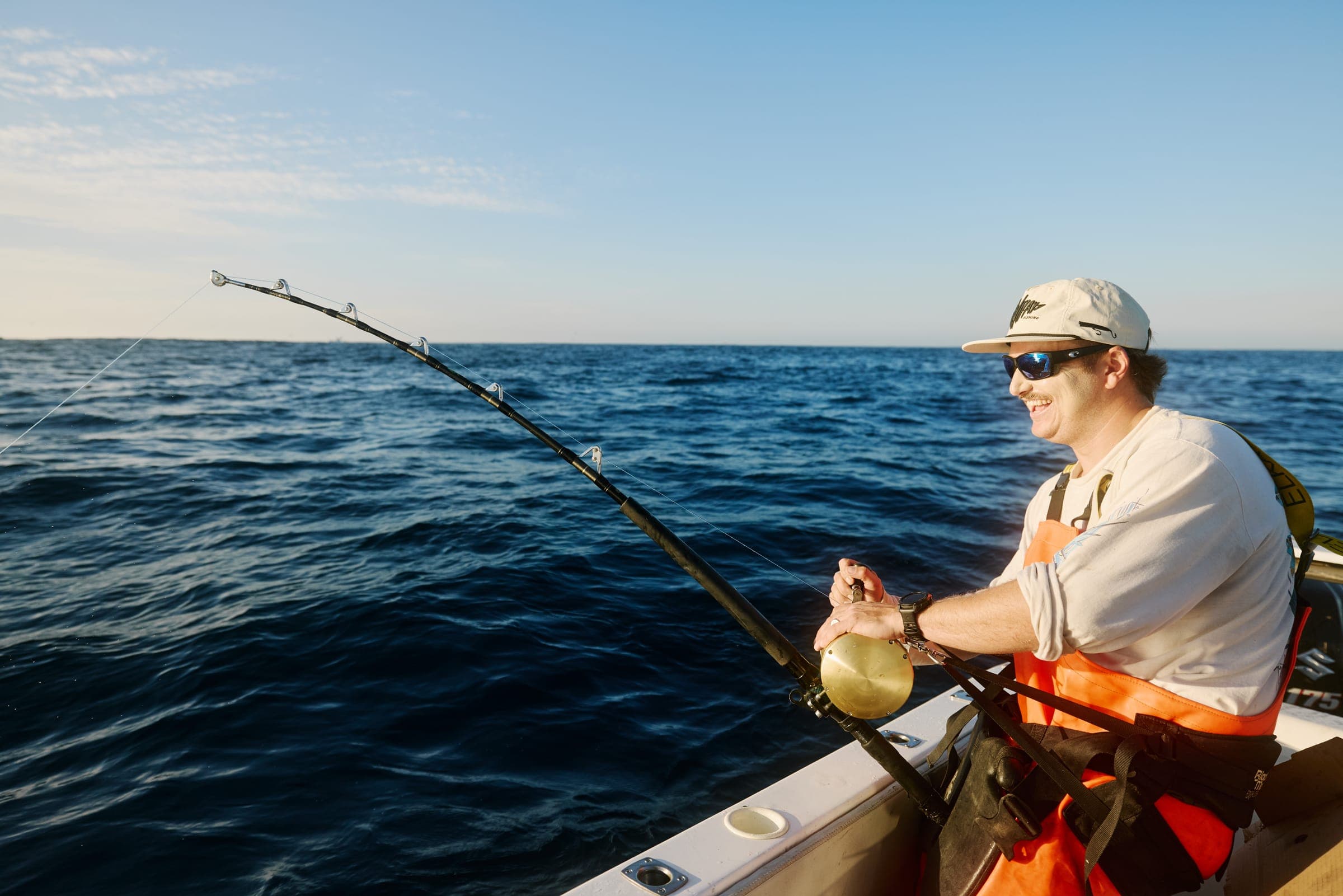
Full-day offshore fishing charters in Cape Town’s world-class tuna fishery aboard Benguela, our purpose-built offshore tuna vessel.
Full-day offshore charters for yellowfin, bigeye, bluefin and longfin tuna, on the grounds south-west of Cape Point.
Target species
Benguela is equipped with high-end fish-finding technology, specialist offshore tackle and everything needed for the 1–2 hour run to the tuna grounds — with no compromise on comfort along the way.
Yellowfin Tuna — 20–100 kgOur most sought-after tuna and the Cape’s ultimate offshore game fish. Yellowfin are primarily targeted using chum and drift baits, often around deep-sea trawlers processing their catch offshore. At certain times of year, large schools of “jumping yellowfin” can be found feeding on baitfish at the surface and targeted by sight-casting poppers on heavy spinning gear. Buckle up.
Longfin Tuna — 8–30 kgThe most abundant tuna species in our waters, often travelling in enormous schools. Longfin are commonly targeted on lighter spinning gear after locating a school while trolling, making them an excellent option for anglers looking for fast-paced action.
Bigeye & Bluefin Tuna — 60–115 kgLess common visitors to Cape waters, but when they appear they mean business. Often mixed in with yellowfin schools, these larger tuna are genuine trophy fish and will test both angler and tackle.
Skipjack TunaThese smaller tuna make up for their size with speed and agility, and can be great fun on light spinning gear.
Offshore Fly FishingDedicated offshore fly-fishing charters can also be arranged on request.
What else comes over the side?
Between January and March, trolling offshore can produce black, blue and striped marlin and dorado in the warmer water. Welcome, but by-catch rather than a target.
Yellowtail, 3 to 8 kilograms, are primarily an inshore fish but turn up offshore around floating structure. Real sport on lighter spinning tackle or a drift bait.
When is the tuna season in Cape Town?
Two peaks, not one, and one stretch we will talk you out of:
- March to June — peak. Consistently the best period of the year for tuna.
- October to December — peak. The second highly productive window.
- January to February — variable. Exceptional in some years, less predictable than the peaks, and the months the marlin and dorado show.
- July to September — low. Tuna are not targeted during this period. Inshore is the trip to book instead.
What is included?
Everything but your kit bag:
- Full-day offshore charter, up to twelve hours
- Experienced captain and mate
- High-end fishing tackle and equipment
- Bait and ice
- Freshly prepared lunch
- Drinks and snacks
How the boat finds fish
Furuno searchlight sonar and an echo sounder, rather than luck. The sonar scans ahead and around the vessel instead of only beneath it, which is what lets a school be located, approached and held rather than crossed once.
Radar, AIS and a chart plotter cover the navigation. VHF, Kavicom and onboard internet keep the boat in contact with other vessels and with shore, which matters on a fishery where information moves between skippers through the day.
Do you need experience?
No, but be honest with yourself about the day. This is nine to twelve hours at sea and the fighting is physical. The crew rigs everything, sets the drag and talks you through it, and the mate is on hand throughout — but a hundred-kilogram fish on stand-up tackle asks something of you.
Children are welcome when longfin are plentiful and the fishing suits lighter tackle. When the fishery is dominated by large yellowfin the physical demands are considerable, and for under-13s we will steer you to an inshore yellowtail charter instead — that is a recommendation from the captain, not a rule at the gangway.
If you would rather ease into it generally, the inshore trip is shorter, closer in and suits every skill level.
At a glance
- Duration
- 9 to 12 hours
- Guests
- Up to 7
- Range
- To 40 nautical miles offshore
- Departs
- Hout Bay Harbour, first light
- Tackle
- Shimano, Calstar and Daiwa, all supplied
- Best months
- March to June, October to December
What it costs
- Private charter, 9 to 12 hoursR 30 000
per boat · up to 7 guests
Each angler needs a fishing permit: R100 a month per person, arranged for you when you book. About permits
Month by month
When to book the offshore tuna
Conditions, species and daylight change materially through the year on this coast. Each month has its own page.
- Januaryvariable
- Februaryvariable
- Marchpeak
- Aprilpeak
- Maypeak
- Junepeak
- July
- August
- September
- Octoberpeak
- Novemberpeak
- Decemberpeak
Variable: can fish as well as the peak months, but less predictable from one year to the next.
Questions
How long is an offshore tuna charter in Cape Town?
Nine to twelve hours, departing Hout Bay Harbour at first light and working to 40 nautical miles offshore.
What size tuna are caught off Cape Town?
Yellowfin from around 20 to over 100 kilograms, bigeye and bluefin between 60 and 115 kilograms, and longfin between 8 and 30 kilograms.
How many people can join an offshore trip?
Up to seven guests. The vessel is surveyed for twelve people in total.
Is tackle included?
Yes. Shimano, Calstar and Daiwa tackle throughout, all rigged and maintained in-house to international standards.
Read next
- experienceInshore light tackle & bottom fishingYellowtail on light tackle at Cape Point or Robben Island, with bottom fishing when the gamefish are quiet. The trip that runs when the offshore grounds will not.
- experienceCoastal cruisesPrivate cruises along the Atlantic Seaboard with a braai at anchor, stand-up paddleboards and unmatched views of Table Mountain.
- guideSeasickness on a Cape Town charter, and how to avoid itTake a non-drowsy antihistamine the night before and again ninety minutes before departure, eat a light breakfast, stay on deck looking at the horizon, and stay hydrated. Taking medication once you already feel ill does not work.
- guideWhat to bring on a Cape Town fishing charterSun protection, a warm windproof layer, soft-soled shoes, extra water, seasickness medication and a dry bag for your phone. Tackle, bait and safety equipment are supplied.
- guideBooking your first offshore charterYou arrive at Hout Bay Harbour before first light, run one to two and a half hours offshore, fish through the middle of the day and are back on the mooring in the afternoon. The crew rigs everything and talks you through the fight.
- guideWhat happens if the weather cancels your charterThe skipper makes the call and you are offered the next available date, or you owe nothing. No deposit is taken and you are never charged for a trip the boat does not run.