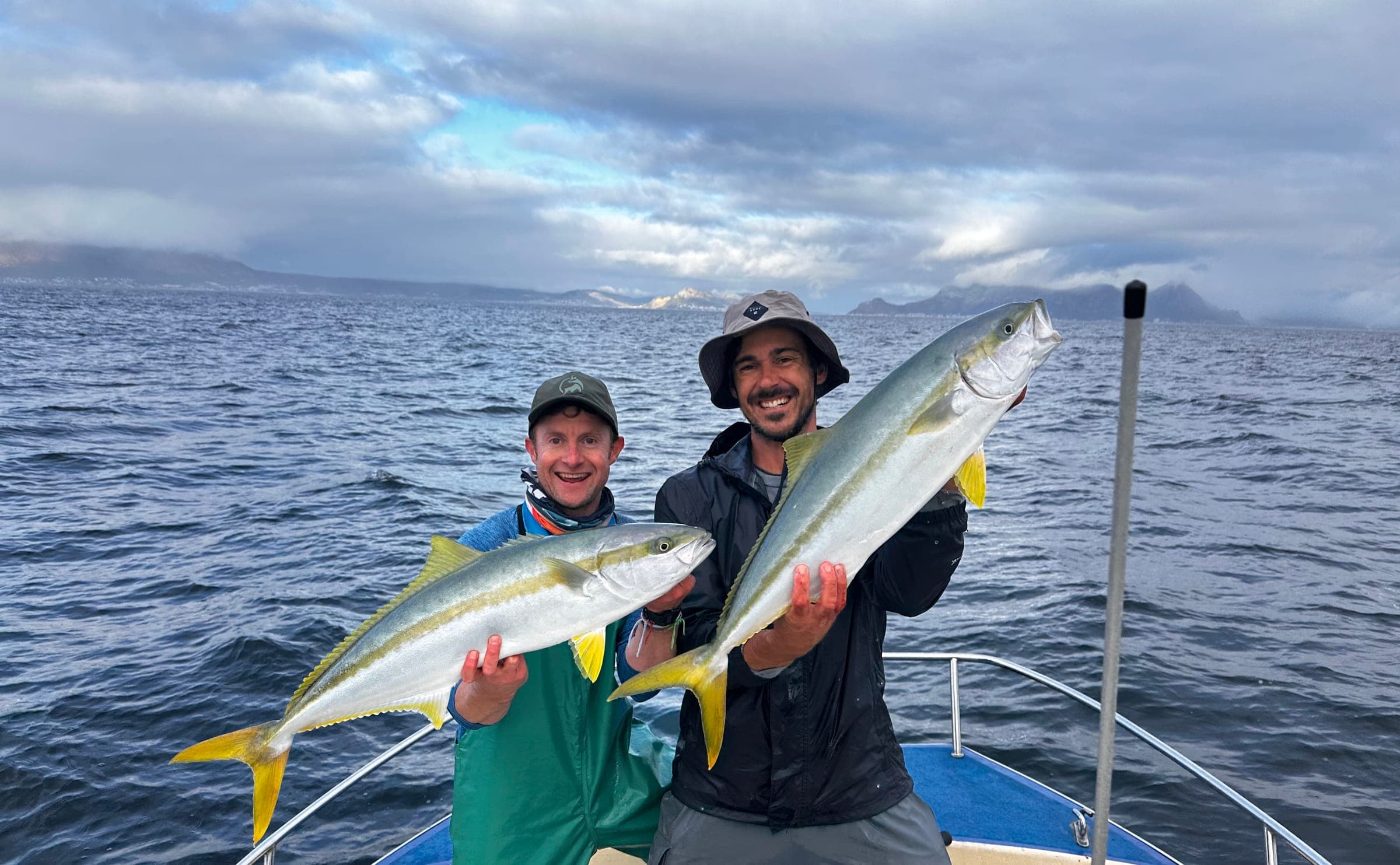
Hout Bay Harbour, Cape Town
Inshore light tackle & bottom fishing
Six to eight hours closer in, sight casting and trolling for yellowtail — the Cape’s hardest-pulling inshore fish, and a trip that suits every skill level.
Yellowtail on light tackle at Cape Point or Robben Island, with bottom fishing when the gamefish are quiet. The trip that runs when the offshore grounds will not.
What do you catch inshore?
Yellowtail is the primary target, caught by sight casting top water lures or trolling. Experienced anglers will especially enjoy the sight casting, but the trip suits every skill level.
Atlantic bonito, skipjack tuna, Cape snoek and slender tuna are also regularly caught inshore, and all give fast-paced action on lighter tackle. Dedicated inshore fly-fishing trips can be arranged on request.
What happens when the gamefish are quiet?
The boat switches to bottom fishing, which is reliable when the surface is not. Targets are red roman, Cape bream, Jacopever and gurnard, on bait or slow-pitch jigging. A good option if you simply want to bend a rod and see the variety along this coastline.
During the permitted annual dates, West Coast rock lobster harvesting can also be included. Availability is limited, so mention it when you enquire rather than on the day.
Does inshore fishing run all year?
Yes, and that is a function of geography rather than optimism. Hout Bay sits close to two distinct inshore fisheries — Cape Point and historic Robben Island — and they produce under different conditions.
When the south-easter shuts one down, the other is usually workable, so the grounds and the technique get chosen on the morning to suit the day rather than the calendar.
How is this different to the offshore trip?
Shorter, closer in and less physical. Six to eight hours against nine to twelve, inshore grounds rather than the shelf edge, and light tackle rather than stand-up game gear.
It is also the more weather-tolerant of the two. When the offshore grounds are unworkable, an inshore day frequently still runs.
At a glance
- Duration
- 6 to 8 hours
- Guests
- Up to 8
- Where
- Cape Point or Robben Island
- Methods
- Sight casting, trolling, fly, bottom fishing
- Suits
- Every skill level
- Best months
- Year-round, two fisheries
What it costs
- Private charter, 6 to 8 hoursR 20 000
per boat · up to 8 guests
Each angler needs a fishing permit: R100 a month per person, arranged for you when you book. About permits
Month by month
When to book the inshore fishing
Conditions, species and daylight change materially through the year on this coast. Each month has its own page.
Questions
Where do inshore fishing trips go from Cape Town?
Cape Point or Robben Island, depending on conditions and on what is running. Trips run six to eight hours from Hout Bay Harbour.
What can you catch inshore off Cape Town?
Yellowtail is the primary target, along with Atlantic bonito, skipjack tuna, Cape snoek and juvenile tuna. Bottom fishing targets red roman, Cape bream, Jacopever and gurnard.
Is inshore fishing suitable for beginners?
Yes. Trolling and bait fishing suit any experience level, and the trip is shorter and closer in than an offshore day.
Can you catch crayfish on a charter?
During the permitted annual dates, West Coast rock lobster harvesting can be included. Availability is limited — ask when you book.
Read next
- experienceCoastal cruisesPrivate cruises along the Atlantic Seaboard with a braai at anchor, stand-up paddleboards and unmatched views of Table Mountain.
- experienceOffshore tuna fishingFull-day offshore charters for yellowfin, bigeye, bluefin and longfin tuna, on the grounds south-west of Cape Point.
- guideSeasickness on a Cape Town charter, and how to avoid itTake a non-drowsy antihistamine the night before and again ninety minutes before departure, eat a light breakfast, stay on deck looking at the horizon, and stay hydrated. Taking medication once you already feel ill does not work.
- guideWhat a Cape Town fishing charter actually costsRates are published in full on this site rather than held behind an enquiry form: every trip is priced as a private charter for the whole boat, with what each includes, and shared charters on the fishing trips can be arranged on request. Most operators in this market will not show a number until you ask.
- guideCorporate and incentive chartersYes. The boat is chartered privately for the day with the schedule, route and format set around the group rather than around a fishing plan.
- guideYellowtail fishing in Cape Town: when, where and howNovember to March is the peak, on the inshore grounds off Cape Point and Robben Island, fished by sight casting, trolling or fly from a six-to-eight-hour inshore charter out of Hout Bay.