Species
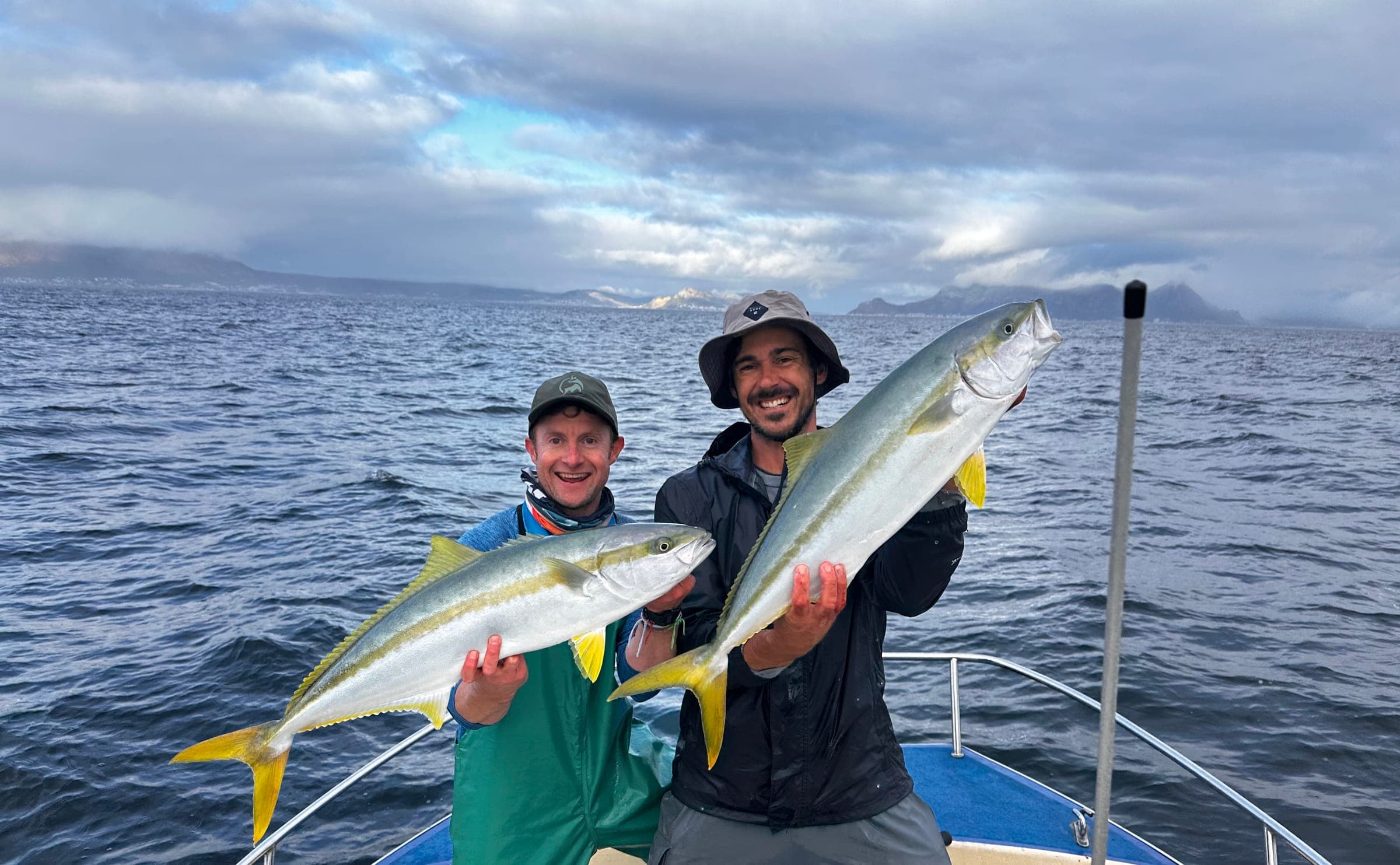
Yellowtail
The primary inshore target, and one of the hardest-pulling fish on this coast for its size.
How do you catch yellowtail here?
By sight casting, trolling or fly fishing on the inshore trip. Experienced anglers will especially enjoy the sight casting; trolling suits any skill level and is how most first-timers connect.
Yellowtail are also regularly caught on the offshore run — en route, or around floating structure in the tuna grounds — where they offer great sport on light spinning gear.
Why do anglers rate them so highly?
Because pound for pound almost nothing on this coast pulls harder. A ten-kilogram yellowtail hooked over a reef will try to reach the bottom immediately and frequently succeeds.
They are fished on lighter tackle than tuna, which makes the fight far more direct.
The facts
- Species
- Yellowtail
- Also known as
- Cape yellowtail, Geelstert, Kingfish
- Scientific name
- Seriola lalandi
- Family
- Carangidae
- Typical weight
- 5–15 kg
- Caught on
- Inshore and Offshore
- Methods
- Sight casting, Trolling, Fly fishing, Light spinning
- Fished from
- Hout Bay Harbour
Seasonality
When to fish for yellowtail off Cape Town
Based on how this fishery actually runs, not on a generic range. Each month links through to that month's conditions.
Questions
When can you catch yellowtail in Cape Town?
November to March is the peak, on the inshore grounds off Cape Point and Robben Island.
Can you fly fish for yellowtail in Cape Town?
Yes. Fly fishing is one of the three methods used for yellowtail on the inshore trip, alongside sight casting and trolling.
Read next
- experienceOffshore tuna fishingFull-day offshore charters for yellowfin, bigeye, bluefin and longfin tuna, on the grounds south-west of Cape Point.
- experienceInshore light tackle & bottom fishingYellowtail on light tackle at Cape Point or Robben Island, with bottom fishing when the gamefish are quiet. The trip that runs when the offshore grounds will not.
- guideSeasickness on a Cape Town charter, and how to avoid itTake a non-drowsy antihistamine the night before and again ninety minutes before departure, eat a light breakfast, stay on deck looking at the horizon, and stay hydrated. Taking medication once you already feel ill does not work.
- guideWhat to bring on a Cape Town fishing charterSun protection, a warm windproof layer, soft-soled shoes, extra water, seasickness medication and a dry bag for your phone. Tackle, bait and safety equipment are supplied.